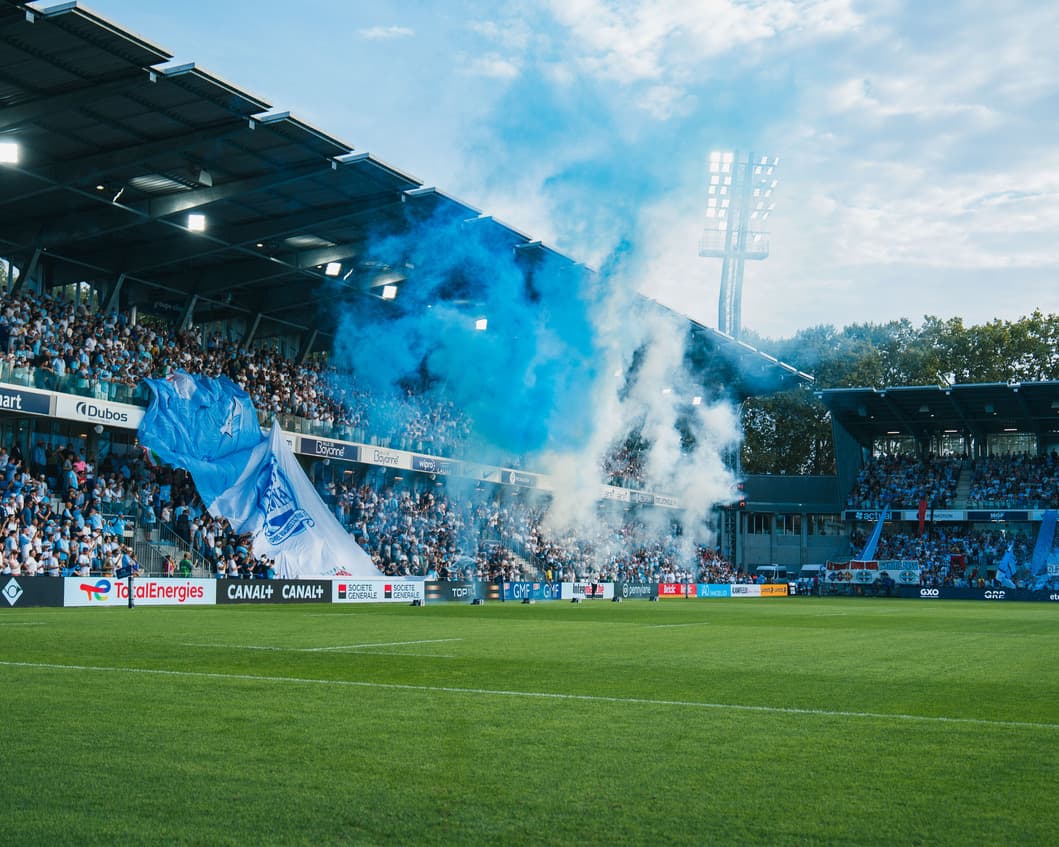
Behind every great rugby fixture, whether a sold-out Top 14 stadium or a packed Super League ground, there’s often a surprisingly small ticketing team. Two or three high performers are there in the background keeping things running and delivering smooth matchdays, loyal season ticket holders and record revenue, all without the headcount of a big operation.
These ticketing teams understand that efficient, digital-first ticketing is what allows them to keep performing like - and sometimes even better than - a much bigger department. It's through constant innovation, finding new revenue streams and maximising attendance that they take their club to the next level.
We’ve seen first-hand how rugby clubs across Europe have used their ticketing as tool to elevate the game. Here’s how they do it.
Strategies for maximising revenue and attendance
1. Resale that maximises every seat
Every seat is an opportunity for the club to maximise revenue. So unused tickets are a chance to seat a fan who wants to see the game. By using a built-in resale marketplace, you can help those tickets find a new owner and earn extra income, without adding anything to a small team’s workload.
At AB Rugby, whose €7M ticketing operation is managed by just two full-time staff, around 6-7% of ticket holders don’t make it to each match. Those seats used to sit empty. Now, through the SECUTIX resale marketplace, fans can pass on a seat they can’t use. Prices are capped at face value, so nobody profits at another fan’s expense, and only the buyer pays a small fee. With a sold-out calendar, those seats almost always find a new owner, which means a fuller stadium and extra income for the club.
“The exchange marketplace means a fan who can’t make a match doesn’t just lose their seat, they’re able to pass it on, and someone else gets to be in the stadium. It works for everyone.”
Laëtitia Bernal
Head of Ticketing & General Public, AB Rugby
2. Optimising pricing for every market
No two fixtures have the same audience, so they shouldn't be priced the same. When a team is using digital ticketing well, they can control pricing and categories directly, allowing them to adapt each match to its market.
EPCR, another high-impact ticketing team of just two people, does this by varying prices by country, venue and capacity. In Bordeaux, the team can price at a premium while in London, prices sometimes need to come down to fill the stadium. When they are aiming for a sell-out, then they can calibrate prices to the local market from the off.
Additionally, categories can be used to maximise revenue from pricing. The Challenge Cup is less sought-after than the Champions Cup, so EPCR split it into more, smaller price categories ensuring there’s an option for every budget, and it’s sold in packages to broaden its appeal.
3. Fill the stadium, and make it look full
A full stadium means a better atmosphere, both for broadcasters and partners. High-performing ticketing teams can control which seats go on sale and when so that they can better fill stadiums.
EPCR does this by filling the lower bowl facing the cameras first, then releases seats progressively, so the stadium looks full on screen even without a sell-out. On the SECUTIX platform the team can manage these releases itself, while legacy ticketing providers mean that ticketing leads must do the work manually to check sales and email the venue to release sections.
Resale timing is also part of their stadium-filling strategy. Like AB Rugby, EPCR uses resale to make sure no seat goes to waste, but it opens resale only once a match has sold out, so it never competes with primary sales. For the Challenge Cup, resale will open around a week before the match, giving fans who genuinely can’t attend a way to pass on their seat without a long resale window.

4. Own the fan data, not just the sale
Every ticket sale is a chance to get to know a fan, but only if the data reaches the club or competition. Most legacy ticketing providers don't give ticketing teams the opportunity to collect their own data, but when they do the impact is powerful.
EPCR made data collection its priority by connecting the login on its own website to the ticket shop. With SECUTIX, they now capture data from every ticket buyer, compared with around 2% under its previous provider. Routing buyers through its website has also grown traffic to the site, giving more visibility to the partners featured there. As a result, its fan database has grown by 156% in just three years.
Knowing where buyers are coming from has changed how EPCR markets, allowing them to target paid campaigns and build its presence where there’s a real market.
5. Marketing that turns buyers into regulars
When marketing runs through the same platform as ticketing, teams save time and see their fans' behaviour clearly.
Using SECUTIX's SAM marketing, the ticketing team at Leeds Rhinos has been able to increase the number of email campaigns they send by 63.7% in one year. The team is also now easily able to see whether a fan opened an email, not just whether it was sent, so decisions are based on what works. It also settles any dispute about whether a fan received an important update.
EPCR treats every on sale as a campaign, combining press, LinkedIn, social media and targeted emails, often reaching the most engaged fans first. Fans already in the database get priority purchase windows, which rewards loyalty and gives others a reason to sign up. New buyers receive an automated welcome journey, followed by offers for merchandise, hospitality and hotel packages.

Small teams, big ambitions
Whether it’s a two-person ticket office in Bayonne, a membership team in Leeds or a competition organiser selling finals across Europe, the teams that invest in their ticketing see real returns. Those returns show up as new revenue streams, fuller stadiums, a fanbase they own and, above all, time to focus on growth. For a small team, the right digital ticketing platform becomes their competitive edge.